

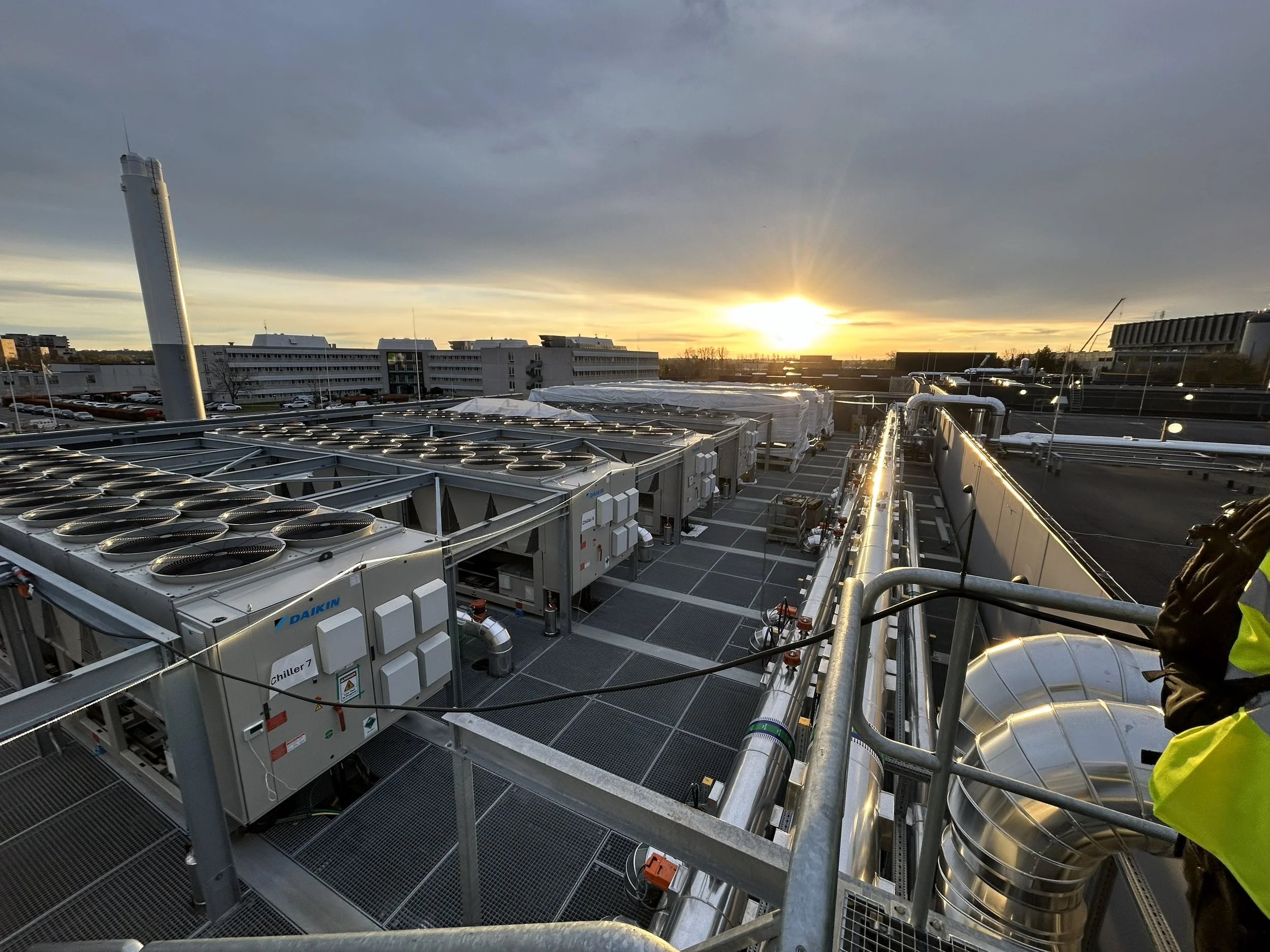
Mechanical Systems
We design and implement advanced cooling and HVAC solutions that ensure optimal performance while minimising energy and water use. Our mechanical strategies are engineered for the demands of high-density AI and GPU environments, with a focus on low PUE and WUE outcomes.
Liquid cooling technologies, including direct-to-chip and rack mounted CDU’s
High-efficiency chillers and free cooling systems
Modular and scalable HVAC systems to adapt to evolving load profiles
Electrical Systems
Zero One’s electrical engineering solutions are built to deliver resilient, scalable, and energy-efficient power infrastructure that meets the exacting of modern data centres. As workloads become more power-intensive and uptime expectations rise, our designs ensure continuous, reliable operation under all conditions.
We take a whole-system approach, integrating distribution, redundancy, monitoring, and automation to optimise both performance and cost efficiency without compromising on safety or sustainability.
Technical Due Diligence
Scope Gap Analysis - Reviewing tender documents to find "missing" items to avoid costs later such as;
Missing control cabling between BMS or Chillers
Missing power supplies to smaller mech equipment
Incorrectly sized power cabling etc
Constructability checks
Verifying that the design can be built as per the coordinated LOD350 model such as;
OFCI equipment spatially match model inputs
Adequate cable gland plates sizes and associated cable bending radius for external runs and internal connections onto toes within the boards
Bending radius in MV/LV chambers and associated pulling calc checks for ducting and chamber runs
Adequate accessibility for installing pipe work, ducting and for cleating cables
Verifying the ladder sections to ensure the mains cabling can fit on the ladders in the correct formation for the cable sizes and de-rating factors specified in the design)
Peer Reviews & Value Engineering
Peer Reviews
Compliance checks – Ensuring the design meets the clients base reference design and specifications
Local building codes MEP compliance checks via localisation partner appointment via our European localisation network (they can be appointed under ZeroOne to reduce administration for GC)
Coordination Review
Detailed model reviews to ensure the MEPmodel is delivered as per BIM Execution Plan (BEP), design is buildable, checking for clashes between pipes, ducts, containment and structure, and ensuring building opes are adequate before construction begins
Value Engineering & Design Enhancement
Investigating cost effective equipment alternatives, and looking for and reducing over engineering in the various design packs whilst ensuring the design still meets the specification
Looking at potential solutions to accelerate program such as prefabricated modules to speed up the site installation
MEP Retrofit Validation Surveys & Gap Analysis
Assessing existing infrastructure against the new requirements to define the "Gap“ Design Definition
Schematic & spatial design of new systems Detailed Design
Detailed coordinated design of the integrated M+E systems including 3D scans of the existing space overlaid with new design to ensure new design elements don't clash with existing, immovable services CFD Modelling
CFD's to ensure the new design doesn't cause hot spots or airflow starvation. Phasing & Migration Strategy Planning Assistance
Supporting the step-by-step sequence of how to replace live equipment without dropping the critical load.
MEP Cost Management
We understand the critical importance of precise and efficient MEP cost management in the construction and operation of data centres. Our specialised services ensure that your data centre projects are delivered on time, within budget, and to the highest standards of quality and performance.
Our Services Include:
Comprehensive Cost Estimation: We provide detailed and accurate cost estimates for all MEP systems, tailored specifically for data centre requirements, ensuring you have a clear financial roadmap from the outset through construction.
Budget Planning and Management: Our team develops robust budgets to keep your project financially on track.
Value Engineering: We identify opportunities to optimise costs without compromising on the critical performance and reliability of your data centre infrastructure.
Risk Assessment and Mitigation: We identify potential cost risks and implement strategies to mitigate them, ensuring your project remains financially viable.
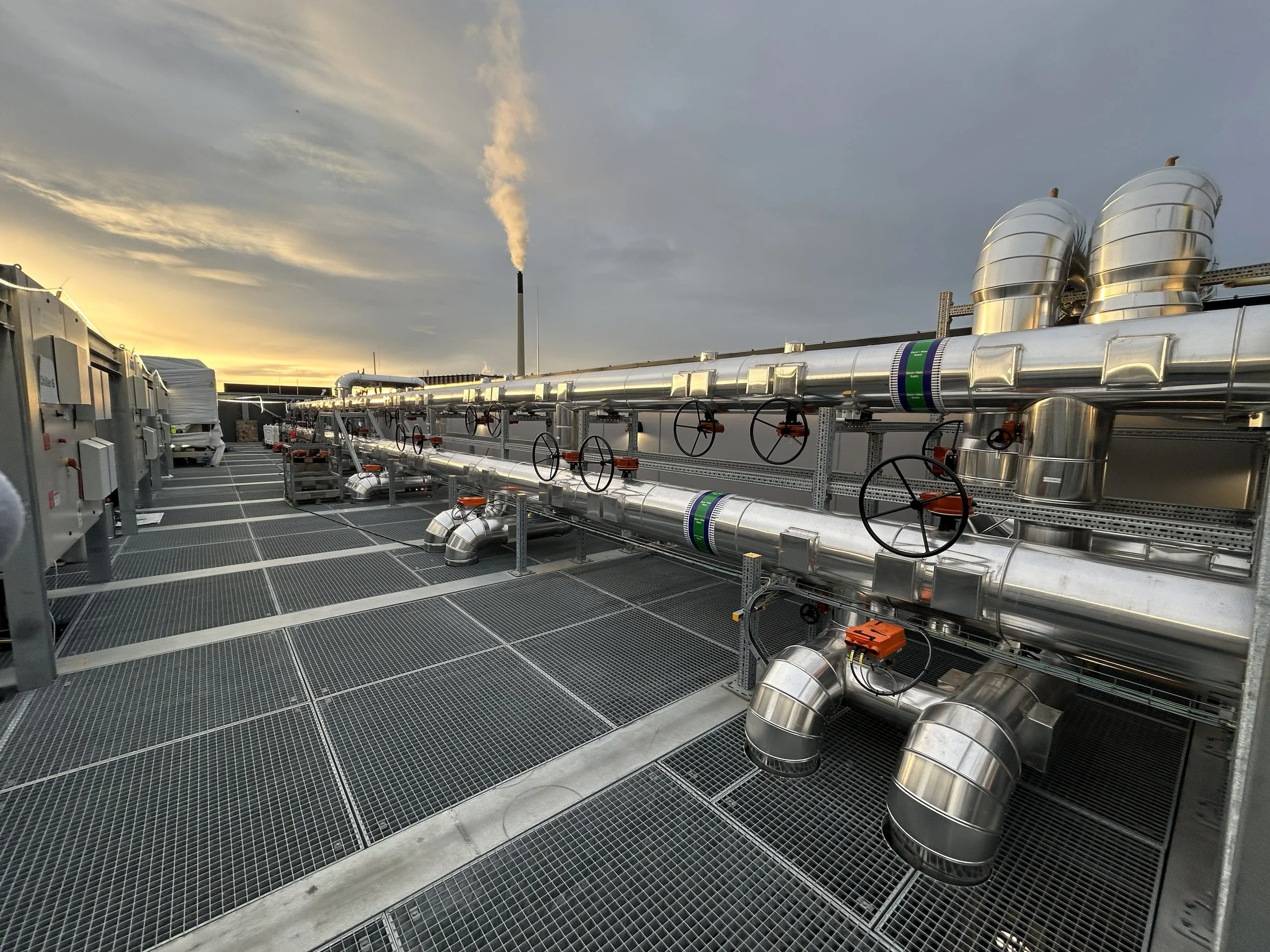
DESIGN STAGES
RIBA Stage 0/1
Assessing site suitability, providing strategic brief input to define project scope, site space planning development and associated feasibility study input
RIBA Stage 2
Detailed options appraisal & subsequent selection of the core M&E topologies, and associated schematic design, plant sizing/specifications and equipment layouts
RIBA Stage 3
Developed design and spatial coordination (BIM/Revit modelling & initial coordination strategy, developed schematics and layouts, specifications, calculations, equipment schedules and interfacing with specialists and wider design team)
RIBA Stage 4
Full Technical IFC Design (Coordinated BIM/Revit model to LOD350, fully detailed drawings and schematics, finalised technical specifications, fully completed calculations and equipment schedules)